

Alienware 16 debuts Intel Core Ultra 9 290HX Plus: benchmark gains come with a higher power draw
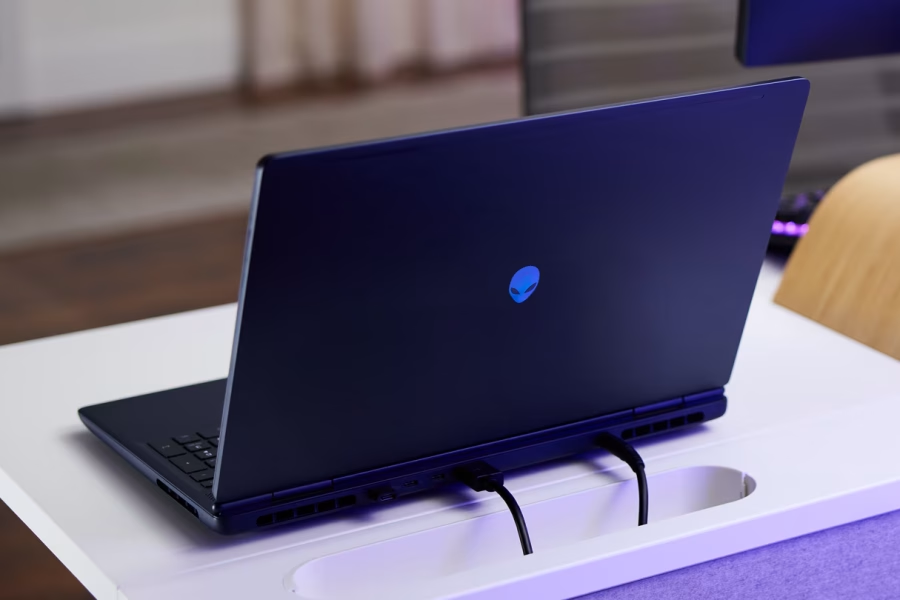
Dell’s updated Alienware 16 is among the first gaming laptops to ship with Intel’s Core Ultra 9 290HX Plus, a new top-tier option aimed at squeezing more performance from the company’s Arrow Lake-HX platform.
Early benchmark results suggest a meaningful uplift over last year’s Core Ultra 9 275HX configuration, but efficiency is not the main story.
In sustained CPU tests such as Cinebench, configurations with the 290HX Plus can post scores that are roughly a quarter higher than comparable systems using the 275HX. That places the new Intel chip closer to AMD’s fastest mobile Ryzen 9 HX3D parts seen in flagship machines from vendors such as MSI and XMG.
More speed, less efficiency
The performance boost appears to come largely from higher operating power rather than a major architectural shift, as both chips belong to the Arrow Lake-HX family.
In heavy workloads like Prime95, the newer CPU option can demand noticeably more power, which typically translates to higher heat output and louder cooling under sustained load.
For buyers, the trade-off is practical: faster compile times and content creation workloads may justify the upgrade, while everyday gaming gains can be limited by the GPU and thermal limits. Higher power draw can also raise operating costs over time and may reduce performance consistency if the laptop throttles to manage temperatures.
What to watch when buying?
How well the Alienware 16 handles the Core Ultra 9 290HX Plus will depend on Dell’s power tuning, cooling profile, and the specific GPU pairing.
Prospective owners should look beyond peak scores and check sustained benchmarks, fan noise, and surface temperatures to see whether the extra headroom is usable in real play and work.
The new CPU tier underscores a broader trend in high-end gaming laptops: pushing desktop-like performance often means accepting higher wattage in exchange for top leaderboard results. For many shoppers, the key question is whether that extra speed outweighs the additional heat, noise, and power consumption.


