
Apple’s power shift begins as Tim Cook exits and a new era takes control

Apple is entering one of the most important transitions in its modern history, and it has little to do with this year’s iPhone or Mac.
The real story is happening in the executive suite, where a generational handover could quietly reshape the company’s priorities for years to come.
After more than a decade leading Apple to record valuations, Tim Cook is stepping down as chief executive. In his place, the company is elevating John Ternus, the long‑time head of hardware engineering, in a move that appears designed to put products back at the center of Apple’s strategy.
The end of the Cook era

Cook took over as CEO in 2011, inheriting what was arguably the toughest job in technology: succeeding Steve Jobs. While he never tried to imitate Jobs’ charismatic product‑showman style, Cook applied his own strengths in operations and finance with remarkable success.
Under Cook, Apple became the first listed company to hit a 1 000 000 000 000 dollar market value, then kept going past 2 000 000 000 000 and 3 000 000 000 000. He optimized Apple’s supply chain, squeezed costs, expanded into China, and built a services empire on top of the iPhone’s installed base.
Investors loved the predictable cash flows from iCloud, Apple Music, Apple TV+ and other subscription offerings. But as the services story grew, some long‑time Apple watchers felt the company was playing it safer on hardware, favoring incremental updates and “parts‑bin” variations over bold new devices.
Cook will not disappear from Apple. He is expected to move into the chairman of the board role, a classic step for a departing CEO who still commands deep influence. Yet the day‑to‑day direction of the company is now changing hands.
A product engineer takes the reins
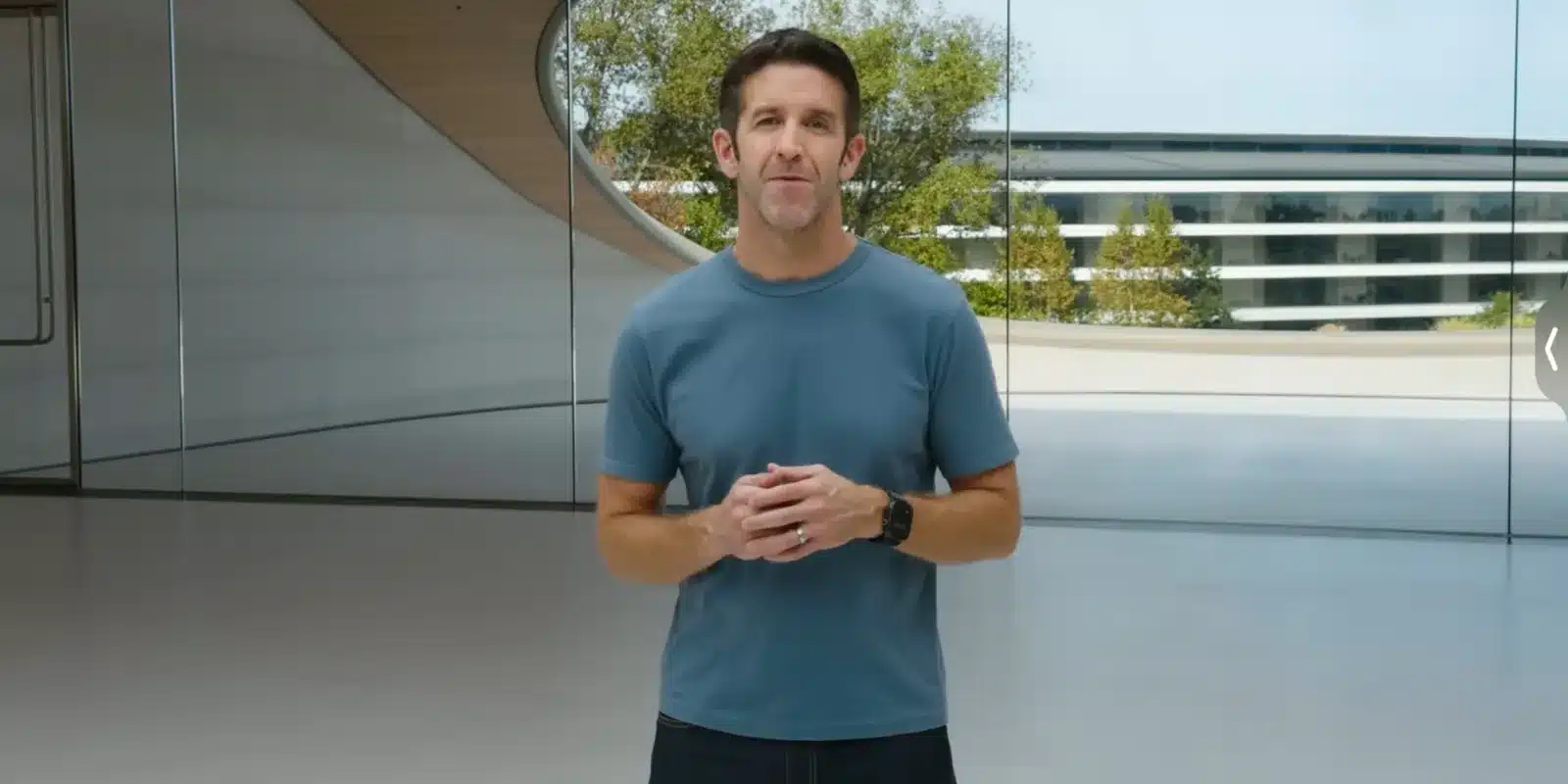
John Ternus, who becomes CEO in September, has spent his Apple career inside the hardware organization. Most recently, he served as senior vice president of hardware engineering, overseeing Macs, iPads and iPhones during a period of highly regarded design course‑corrections.
Under his watch, Apple reversed many of the most controversial decisions of the Jony Ive era. The too‑thin MacBook Pros with unreliable butterfly keyboards and thermal issues were replaced by thicker, more practical models with better cooling, full‑size function keys and the return of HDMI and MagSafe.
Ternus also helped steer the transition to Apple silicon, which transformed the Mac line’s performance and battery life. Devices such as the entry‑level Mac mini and the aggressively priced MacBook Neo have been praised as some of the best value computers in Apple’s modern lineup.
Colleagues and interviewers describe Ternus as a true “product guy” who is comfortable digging into materials, thermals, repairability and design trade‑offs. That stands in contrast to Cook, who has often spoken in broader business terms rather than engaging deeply with individual products in public.
Symbolically, Apple has already been positioning Ternus in the spotlight. At recent events, he has delivered the live introductions to pre‑recorded keynotes at Apple Park, a role long associated with Cook. With the iPhone launch this September, he is expected to front the entire presentation as CEO.
A broader generational handover

Ternus’ promotion is part of a wider reshuffle inside Apple. Over the past year, several long‑tenured executives in their mid‑60s have retired or moved aside, passing responsibility to a younger cohort that grew up inside the Cook era but is keen to put its own stamp on the company.
Johny Srouji, the influential head of Apple silicon, is moving up to lead hardware technologies more broadly. His team’s custom chips have become one of Apple’s biggest strategic advantages, from iPhones to Macs and potentially to future categories like headsets and cars.
This coordinated turnover suggests more than routine succession planning. It looks like a deliberate pivot toward leadership that is deeply immersed in engineering, silicon and device design, rather than primarily finance and operations.
For consumers, that raises an obvious question: will this “new Apple” take more risks on hardware again, after years of careful incrementalism?
Can Apple learn to risk failure?

Apple has long shown a cultural aversion to public failure. When the company does stumble, the missteps echo loudly: think of the cancelled AirPower charging mat, the first‑generation Vision Pro’s mixed reception, or smaller experiments like the iPhone 16e.
By contrast, rivals such as Google and Samsung throw more ideas into the market, from foldables and experimental wearables to smart home gadgets that sometimes vanish within a year. Many of those products fail quietly, but the companies learn quickly by shipping.
Apple’s caution has meant some categories remain conspicuously empty. There is no Apple‑branded camera, no smart display to rival Amazon’s Echo Show, and no consumer‑ready smart glasses despite years of augmented reality research. Even in areas Apple has entered, like smart speakers, the lineup remains minimal.
Still, there are hints that the company may be ready to stretch again. The Vision Pro headset, though expensive and niche, was a genuine swing at a new platform. A folding iPhone, which Apple is widely rumored to be developing, would mark another big hardware bet.
If Ternus’ track record with MacBook Pro and MacBook Neo is any guide, his leadership could encourage more of these thoughtful experiments: devices that are ambitious, but grounded in strong engineering and real‑world usability.
The road ahead for Apple

The challenge for Apple’s new leadership will be balancing bold hardware with equally strong software. Recent releases like macOS Tahoe and new Siri features powered by Apple Intelligence have drawn mixed early reactions, with some users praising privacy‑focused designs and others frustrated by bugs and limitations.
To truly define the next decade, Apple will need to close the perceived gap between its premium hardware and occasionally uneven software experience. A more product‑driven CEO could push for tighter integration and faster iteration across both.
None of this will transform Apple overnight. The company is a vast ship with thousands of people rowing, and its course changes slowly. Yet the simultaneous rise of Ternus, Srouji and other engineering‑centric leaders suggests that the internal conversation is shifting.
In five or ten years, Apple may be judged less on services revenue and more on whether it delivered another wave of category‑defining devices. If this leadership transition succeeds, the next era of Apple could feel closer in spirit to the Steve Jobs years, not because of personality, but because the products reclaim center stage.